
Every year, when the Board of Kenya Fuel & Bark Supply Plc convenes its Annual General Meeting, it is easy to think of it as routine company business – financial statements, dividends, the election of directors. But behind the name of this company, and behind the building that has served as its registered office for generations, sits one of the most significant addresses in Kenya’s modern history.
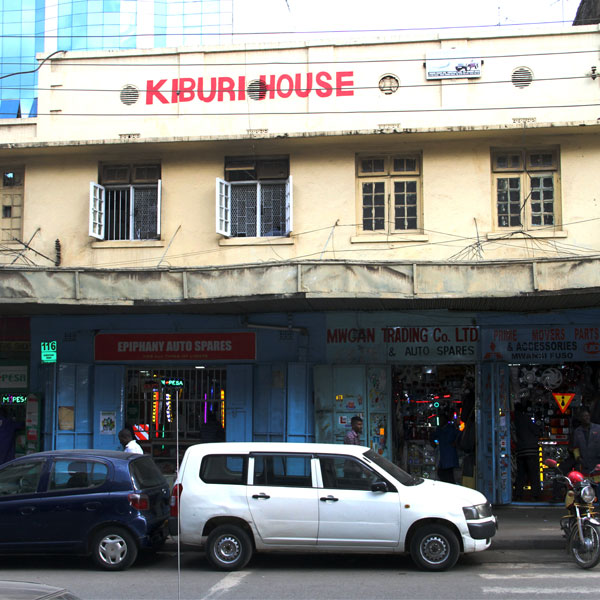
Kiburi House, Kirinyaga Road, Nairobi – photographed in 2018.
From Kiambu Fuel Supply Company to Kiburi House
The company now known as Kenya Fuel & Bark Supply Plc traces its roots to the Kiambu Fuel Supply Company, founded by Kiburi wa Thumbi and registered in 1946. As the business grew and spread into Murang’a, Nyeri, and Embu, it was renamed the Kenya Fuel and Bark Supply Company Ltd.
In 1948, the company bought a modest one-storey building in downtown Nairobi for Sh 8,000 – and named it Kiburi House, in honour of its founding chairman. It was, by most historical accounts, the first building in Nairobi’s Central Business District to be owned by an indigenous Black Kenyan.
A centre of Kenya’s independence movement
What happened next turned a company office building into a landmark of national history. In 1950, Richard Macharia offered a room in Kiburi House to the Kenya African Union (KAU), which made it their Nairobi branch office. The Transport and Allied Workers Union – then the country’s most powerful labour movement – moved in soon after.
Almost overnight, Kiburi House became a centre of African politics and trade unionism in colonial Nairobi. It served as the publishing centre for three newspapers – Wiyathi, Inooro ria Gikuyu, and Afrika Mpya – and, most significantly, it became a meeting place of the Mau Mau movement, hosting War Council meetings and the oathing rites for which the movement is remembered. In a 1971 interview with DRUM magazine, nationalist leader Bildad Kaggia recalled that Kiburi House “spelled dread and fear for the colonial authorities.”
A gazetted national monument
Today, Kiburi House is a gazetted national monument – recognised, alongside buildings like Kipande House, as part of the physical fabric of Kenya’s struggle for independence. Like much of Kirinyaga Road, the ground floor has long been home to hardware traders and small businesses, a working commercial building rather than a museum piece.
It remains Kenya Fuel & Bark Supply Plc’s registered office to this day – the same building, the same name, nearly 80 years on.
What comes next
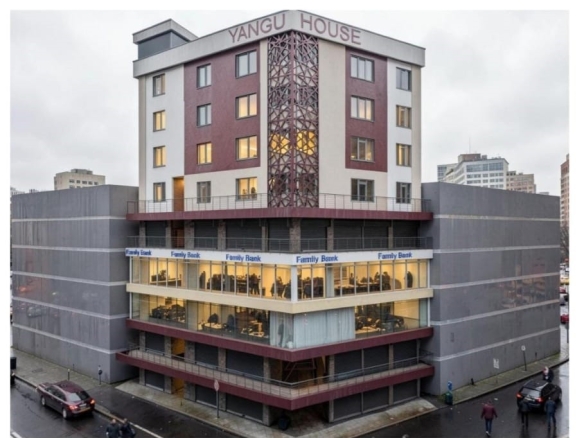
As reported in our Chairman’s Statement, Kiburi House is next in line for redevelopment, following the same path that has just transformed Yangu House into a modern ten-storey tower. For a company whose very name is tied to this building’s history, that redevelopment carries a responsibility beyond the ordinary – to build for the future while honouring what this address has meant to Nairobi, and to Kenya, since 1948.
Sources: The Standard, Daily Nation, John Kamau, historian, and Kenya Geographic.

Join The Discussion